How Much Do ZIP Blinds Cost in NZ, and How Many Sides Should You Budget For?
The second quote was more than double the first, and the couple holding both of them could not see why.
Take a situation we hear about often. A couple in Auckland finished a louvre roof over their back deck last summer. It works well in the middle of the day. By late afternoon, though, the sun comes in low under the western edge, and the neighbour's upstairs window looks straight down onto the table. When a shower blows through from the side, the chairs on the open edge get wet while the rest of the deck stays dry. They decide ZIP blinds are the answer and ask around for prices.
The first supplier prices one blind for the western side. The second prices three: the western side, the side facing the neighbour, and the long open run along the edge of the deck. Both quotes are for the same type of product. Both are fair. They are simply answering different questions, and nobody has told the couple that.
This is the most common confusion we see with ZIP blind pricing. People compare totals before they compare what each total covers. A quote for ZIP blinds is really a set of separate prices, one for each opening, and each of those depends on how big the opening is and how it is framed. Until you know how many sides you want to close in, a single figure tells you very little.
The turning point comes when the couple stop looking at the totals and start asking what each side is for. The western side is about sun. The neighbour side is about privacy. The long open run is about rain, and on reflection they use that end of the deck less than they thought. They settle on two sides, and the budget suddenly makes sense.
What the Market Range Actually Covers
Across NZ suppliers in 2026, a single outdoor ZIP blind typically costs between NZ$1,000 and NZ$5,000 or more, supplied and installed, with GST included. These are market ranges, not Louvresky prices. The figure for any one blind depends mainly on the size of the opening and the material, with the control option and the way the blind is fixed adding to it.
Smaller and standard openings tend to sit in the lower and middle part of that range. Larger openings, with longer side channels and a bigger fabric panel, sit toward the upper end. When several blinds go on one structure, the range applies once for each opening, because every opening is measured and made separately. That is exactly what happened with the couple's two quotes: one price for one opening against three prices for three.
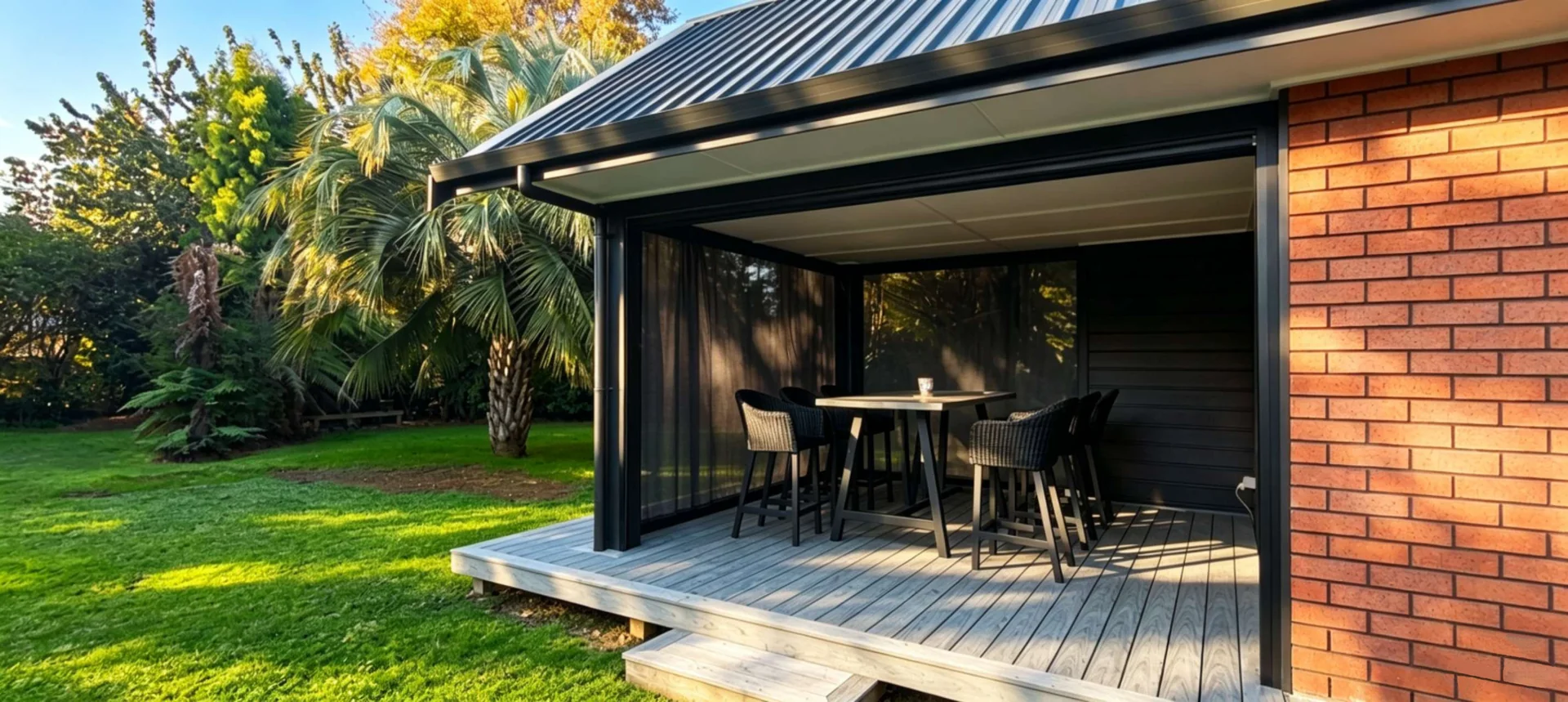
Louvresky quotes ZIP blinds item by item, one opening at a time. The blinds are made to your measurements and finished to match the frame they are fitted to, not cut down from a standard size. Every project is measured on site and priced individually, so your own figure comes from a quote for your space. Our outdoor ZIP blinds page shows the blinds fitted to a finished pergola.
One more thing to check when you line quotes up side by side: whether GST and installation are included. Market ranges like the one above usually include both. A supply only price can look much lower on paper and end up close to the same once fitting is added.
Why Two Openings on the Same Deck Can Cost Different Amounts
Go back to the couple's deck. The western side is a neat gap between two aluminium posts. The neighbour side runs into the house wall. The long run along the deck edge is the widest opening of the three. Each of those is a slightly different job, and the price follows.
The size of each opening matters most after the number of openings. A bigger opening needs more fabric and longer channels, and each blind is made to measure, so there is no shortcut there. Size also sets what can be made in the first place. Our ZIP blinds can span openings up to 6m wide, and an opening narrower than 800mm cannot be fitted with a motorised blind. If you have narrow gaps between posts, it is worth measuring them before you ask for a price.
How the opening is framed matters more than most people expect. An opening between two posts is straightforward. An opening that meets a house wall, a step in the deck or an existing structure may need extra fixing work, and that shows up in the quote. This is one reason we measure every site before pricing anything.
The control option is the next decision. Louvresky ZIP blinds come with a 16 channel remote as standard, so one handset can run a single blind on its own or several at once. A wall switch, app control and smart home connection are also available, and each sits in a different cost tier. It helps to decide how you actually want to use the blinds before you compare prices, because two quotes with different controls are not comparing the same thing.
Site access and finish make smaller differences. Height, tight access or a busy site can add time on install day. Matching the frame and channel colour to your pergola or house joinery is usually a minor part of the total, but it is the detail that makes the blinds look like they were always part of the structure.
Every opening is measured and made separately, so your total is the sum of the sides you choose to close in, not a single product price.
The Side That Faces the Neighbour
For the couple, the neighbour side turned out to matter as much as the sun side. That is common. Privacy is one of the main reasons people buy ZIP blinds, alongside wind, rain and sun, and it is worth saying out loud when you ask for a quote because it changes which sides come first.
A ZIP blind is one product doing several jobs at once. With the blind down, it shades the low sun, screens the view from next door and takes the edge off the wind. Most rain that blows in from the side stays off the deck. Under a roof that is waterproof when closed, that gives you a covered space you can still use on a wet spring evening. The fabric and colour are chosen for the space, so the same blind can be set up to suit a sunny western edge or a side where privacy is the priority.
The fabric runs inside zipped side channels, which hold it in place so it does not flap loose. Our ZIP blinds are rated for wind up to 120 km/h and have a UV Protection Factor of 80+, which helps with low morning and afternoon sun. They come with a 4 year warranty.
For Auckland homes, the first side to get a blind is often the one that catches the low western sun later in the day, or the one that looks straight onto a neighbour. On more exposed sites, the side facing the prevailing wind is a common choice. Every section is different, so we look at which sides to cover during the site measure. If you are pairing blinds with a roof, our guide on how outdoor blinds turn a louvre roof into a full outdoor room shows how the two work together.
How Many Sides Should You Budget For?
The price is set opening by opening, so build the budget one side at a time.
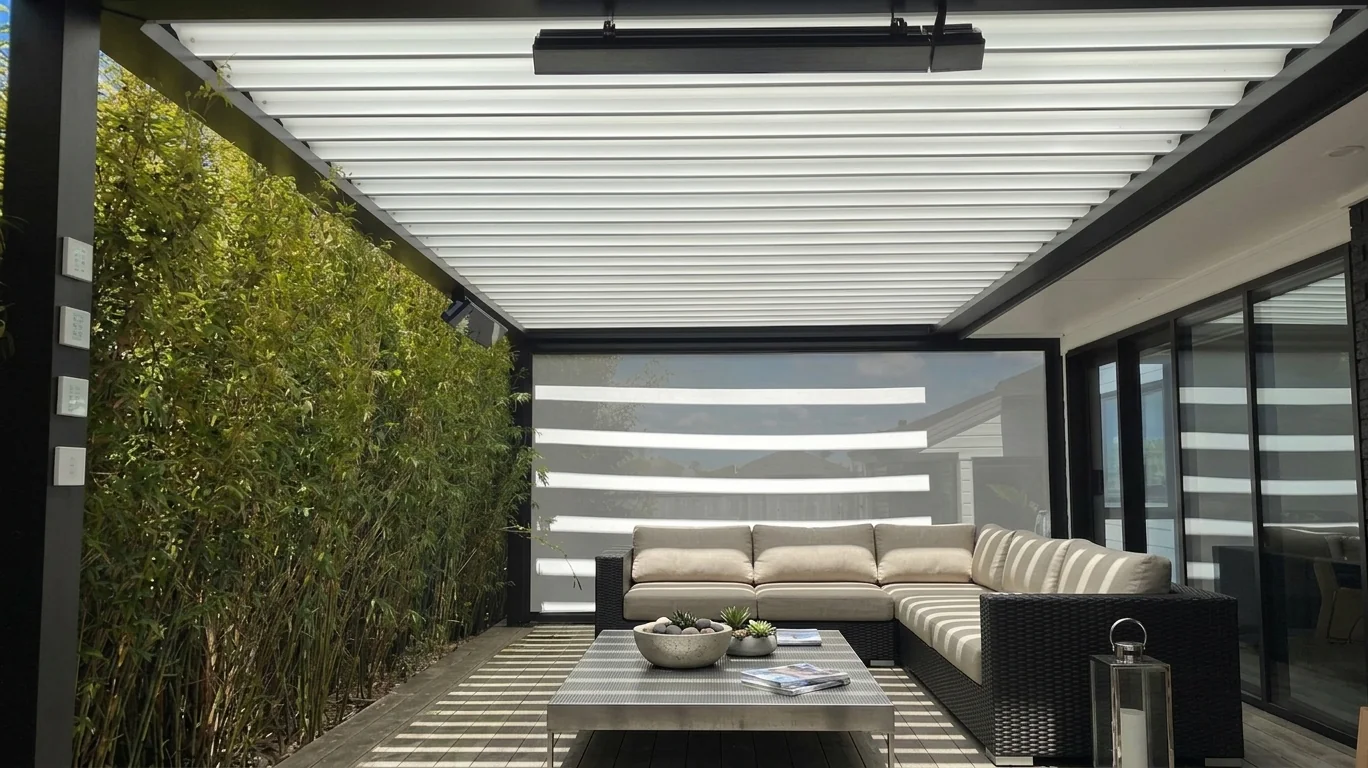
One side is the most common starting point. It usually covers the side with the harshest sun or the clearest view into your outdoor area, and you budget for one blind within the market range above. Plenty of people start here, live with it for a season, and find it changes how they use the space more than they expected.
Two sides often cover a corner, with one side for sun and the other for privacy. This is where the couple ended up. You budget for two blinds, each priced to its own opening, so a short side and a long side will not cost the same.
Three sides under a roof give the most sheltered result. You budget for three blinds and expect the larger openings to sit higher in the range. This suits people who want to use the space in cooler or wetter weather and have a clear reason to close in the third side.
Working side by side means you only pay for the openings that change how you use the space. The honest question for each side is how often you would actually have that blind down. If the answer is rarely, it can usually wait. The site visit will show which sides are worth covering and which you can leave open.
What to Have Ready Before the Measure
Market ranges are a starting point. Your quote depends on your openings, your structure and how you want to use the space. Our process covers a site measure, custom manufacture and installation, and each blind is made to the measurements taken on your site.
Have these ready when you ask for a quote:
- Photos of the area, including each side you are thinking of covering
- Whether you already have a roof or pergola, or are planning one
- What you most want the blinds to deal with: sun, wind, side rain or privacy
- How you would like to control them: remote, wall switch, app or smart home
Louvresky is based in Auckland and works on projects across New Zealand. You can see ZIP blinds and our louvre roofs in person at our showroom, 177 Morrin Road, Saint Johns, Auckland.
Spring is when most people start thinking about blinds, usually after the first warm afternoon when the low sun hits the table. If there are sides you want covered for summer, it is worth getting them measured now rather than waiting for the first hot week. Request a quote for your space and we will start with a site measure.
ZIP Blinds Cost FAQs
How much does a ZIP blind cost in NZ?
In the current NZ market, a single ZIP blind typically costs between NZ$1,000 and NZ$5,000 or more supplied and installed. The price depends mainly on the size of the opening and the material, and larger openings sit toward the upper end of that range. Every Louvresky project is measured and priced individually, so your quote will reflect your own openings.
Do ZIP blinds need building consent?
Consent and engineering are not required for every project, and requirements depend on the scale of the project and the site. Where a project does need council consent, there are additional costs covering items such as engineers, designers and council fees, which vary by project and are assessed and quoted separately. For background on how consent works, the government's Building Performance website explains the Building Code and the consent process.
Do ZIP blinds keep the rain out?
With the blinds down, most rain that blows in from the side stays off the deck. Under a roof that is waterproof when closed, that gives you a covered space you can still use on a wet day.
What warranty and durability come with ZIP blinds?
Our ZIP blinds come with a 4 year warranty, are rated for wind up to 120 km/h and have a UV Protection Factor of 80+. The fabric runs in zipped side channels that hold it in place. Like any outdoor fabric, how it wears over time depends on how much sun and weather each side gets.