Pergola With Roof NZ: Choosing the Roof That Suits Your Space
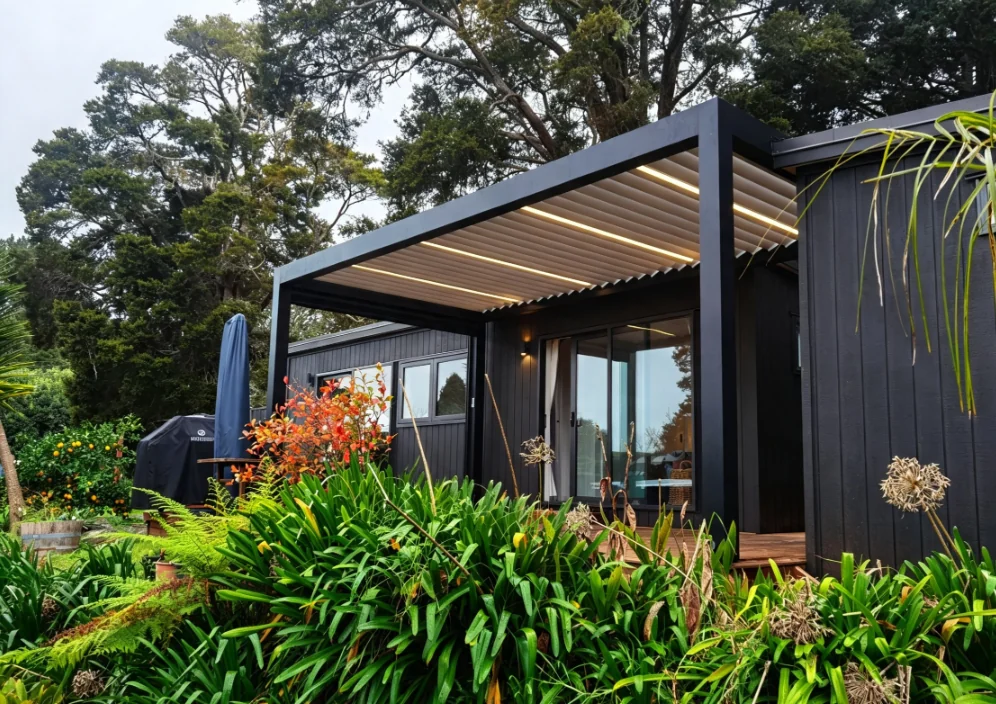
A pergola with roof is a pergola frame with a cover on top, so you can sit outside through a light shower or the strong afternoon sun. The roofs we make come in four forms: adjustable aluminium louvres, a retractable louvre roof, our Retractable Patio Roof with a PVC fabric cover, and a retractable fabric awning. Adjustable louvres suit a lot of homes, because the blades close for rain and tilt open to let daylight back into the house.
The questions below run in a simple order: what a roof changes, which roof to pick, and what to sort out before you ask for a quote.
If you'd like a second opinion on your own space early on, send us a few photos through our quote request form and we'll tell you which roof types are worth a closer look for your site.
What changes when you put a roof on a pergola?
Quite a lot, actually. An open pergola mostly has to hold itself up. Once it has a roof, it also has to:
- collect rain and send it somewhere sensible
- handle wind pushing on the roof from above, below and the side
- cope with salt air, frost or a long wet winter, depending on where you live
Our aluminium systems are designed with all three in mind. The roof is the part you look at, but the posts, footings and drainage do most of the work.
A roof also changes the light in the rooms behind it. We'll come back to that shortly.
Which roof options can you put on a pergola?
There are four we talk through most often. Here's how they compare in plain terms.
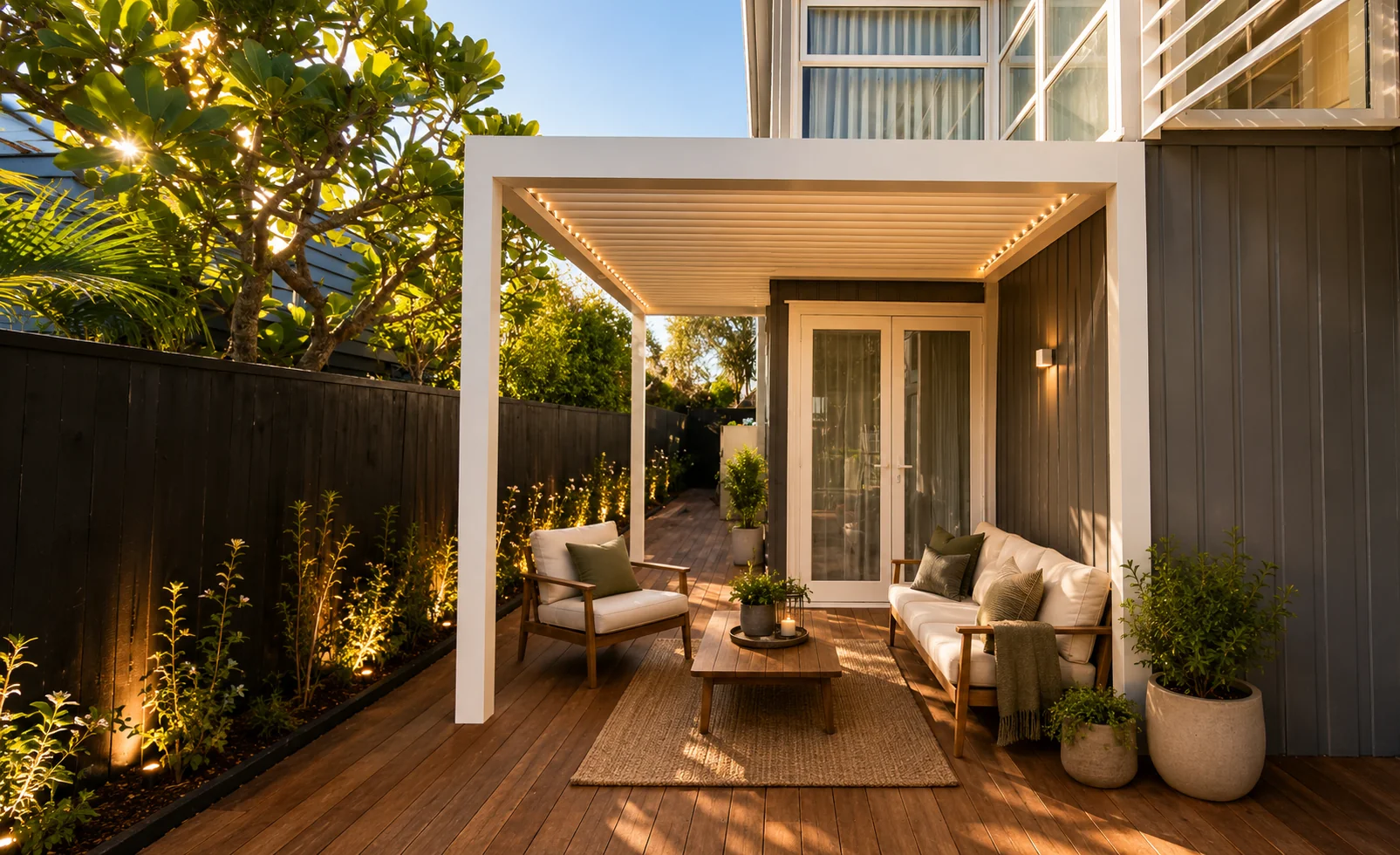
| Roof type | How it works | Good to know |
|---|---|---|
| Adjustable louvre roof (Toa, Mana, Tika) | Aluminium blades that tilt | Waterproof when closed; tilt the blades to let light and air through |
| Retractable louvre roof (Te Pō) | Aluminium blades that retract as well as tilt | Suits households that want shelter on some days and open sky on others |
| Retractable Patio Roof (our PVC cover line) | Aluminium frame with a PVC fabric cover that extends and retracts | Gives rain cover overhead when extended, with a slight pitch so water runs off the front |
| Retractable awning (Rangi) | Aluminium frame with shade fabric that extends and retracts | Gives shade and rain cover when extended; the fabric has its own service life |
Within the adjustable louvre roofs, our three series cover different jobs. Toa is the standard series for homes and light commercial spaces, made to the size of your project. Mana is the heavy-duty series for larger spans, exposed sites and the coast. Tika is our entry series: a freestanding four-post pergola that comes in a set range of ready sizes, in black or white only, for spaces that suit one of them. You can see all three side by side on our aluminium pergola page.
One thing worth knowing: Te Pō and Rangi are different products, not a heavier and lighter version of the same idea. Te Pō uses aluminium blades. Rangi uses fabric. Which one fits comes down to the look you want and how you plan to use the space.
Will a roofed pergola make the house darker?
It can. A roof over a living room slider or a kitchen window takes light from that room as well as from the patio.
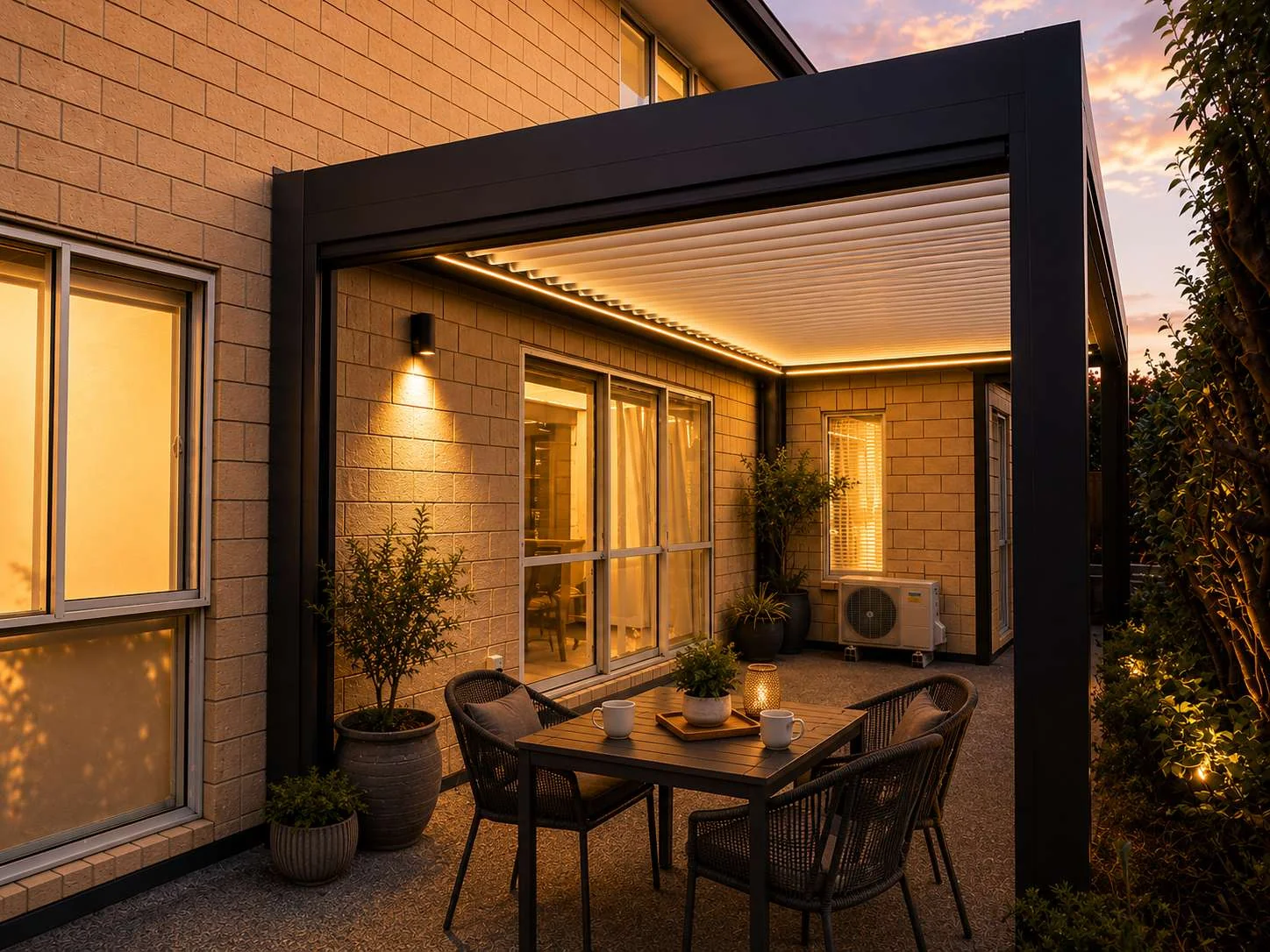
With an adjustable louvre roof, you can tilt the blades open on a grey July afternoon and close them again in midsummer. With Te Pō or our Retractable Patio Roof, you can draw the roof back on the days you want more light. Being able to change the roof matters most for an attached pergola on the north or west side of a house.
A freestanding pergola set away from the house usually has less effect on the light indoors, though you give up the easy step from indoors to out. It's a trade worth thinking about before anything is drawn up.
Where does the rain go once there's a roof?
Somewhere, and deciding where is much easier before the posts go in.
On our louvre roofs, the blades direct water into gutters built into the frame, and concealed drainage carries it down through the posts. The choice to make early is where it comes out at ground level:
- into a garden bed that can take the water
- into a stormwater connection
- across the patio you've just covered, which is the one to avoid
A heavy Auckland downpour on a roof of any decent size is more water than most people picture. Give the outlet the same attention you give the roof.
Does a roof make wind more of an issue?
Yes, because a roof gives the wind something to push against. The posts, fixings and footings take that load, so how exposed your site is shapes the structure as much as the size does.
A sheltered courtyard in town and a section on a ridge near the sea are different design problems, even with the same footprint. On exposed and coastal sites, Mana is usually the series we look at first. It is rated for winds up to 220 km/h.
What about rain that blows in from the side?
A roof handles what comes from above. Rain driving in sideways, or a cold southerly coming in low across the deck, is a problem at the edges, and a heavier roof won't change that.
If one side of your space takes most of the weather, ZIP blinds on that side tend to do more than any change to the roof. The fabric and colour are chosen to suit the space, and plenty of people add them for privacy from the neighbours too.
Should the roof attach to the house or stand on its own posts?
Both work. They just suit different sites.
Attached to the house, the pergola reads as part of the building and usually needs fewer posts. The wall has to be able to carry it, and the light question above applies directly to the room behind.
On its own posts, it needs its own footings and loses the shelter of the house. In return, you can put it where the sun actually is, at the far end of the lawn, beside the pool or on a level spot of a sloping section.
If you're not sure which way to go, that's a normal place to be. It's usually easier to decide once someone has stood on the site with you and looked at the sun, the wind and the walls.
What shapes the cost of a pergola with roof?
Tika comes in a set range of ready sizes, and our other custom series are made to your site measurements. Either way, we quote each project on its own rather than publishing set prices. What moves the number is fairly predictable, though:
- the size of the area you want covered
- the roof type and series
- how you want to control the roof: manual, remote or wall switch, with app control and smart home connection sitting in different cost bands
- site conditions and access for installation
- how the water will be drained away
- accessories, such as ZIP blinds on one or more sides
- footings or deck reinforcement, where the site needs them
Some items, such as concrete footings, deck reinforcement, removal and council applications, are often handled by other specialists. We can help connect you with the right professionals.
Warranty runs from two to ten years, depending on the component.
What happens between asking for a quote and sitting under the roof?
The steps are simple. We measure the site. Our custom series are then made to those measurements, while with Tika we choose from the ready sizes. After that, the roof is installed. If your project does need consent, that adds its own steps before installation, and we talk you through them at quote stage.
How long each part takes depends on the project, so we give you a timeline once we've seen the site rather than guessing at it here.
Can you see a louvre roof before you decide?
Yes, and it's worth doing. Photos only go so far in showing how a louvre roof feels when the blades move overhead.
Our Auckland showroom at 177 Morrin Road, Saint Johns, has a Mana louvre pergola on display, the heavy-duty series rated for winds up to 220 km/h. You can watch the blades tilt, look at the fittings up close and talk through your own space with us while you're there.
Book a showroom visit and bring a few photos of your outdoor area. Whether you're in Auckland, Hamilton or further afield, we'll go through which roof suits your site and how the light, rain and wind would play out. If a visit doesn't suit, the quote request form at the top of this page works just as well.
Got a few more quick questions?
Is a pergola with a roof still a pergola?
In everyday use, yes. Strictly speaking a traditional pergola is an open frame, so some people call a roofed one a patio roof or a louvre roof instead. What matters more is what you need the roof to do: shade only, or shelter from rain as well.
Does a pergola with a roof need building consent?
Consent requirements depend on project size and site, and consent and engineering design are not required for every project. Where a project does need government consent, there are additional fees covering items such as the engineer, designer and council, which vary by project and are assessed and quoted separately. For Auckland properties, Auckland Council sets out what applies.
Will a louvre roof keep the rain out?
With the blades closed, the roof is waterproof and the water is carried away through the frame. Rain blowing in from the side is a different matter, and that is usually handled with a ZIP blind on the exposed side.
Which roof suits a coastal property?
Salt air and wind exposure both count on the coast. Mana is our heavy-duty series, rated for winds up to 220 km/h. Each coastal site is still assessed at the measure, because exposure varies from one section to the next.
What warranty comes with a roofed pergola?
Warranty runs from two to ten years, depending on the component. We go through what applies to each part when we quote.