Louvred Pergola vs Retractable Patio Roof: Which One Is Right for Your NZ Home?
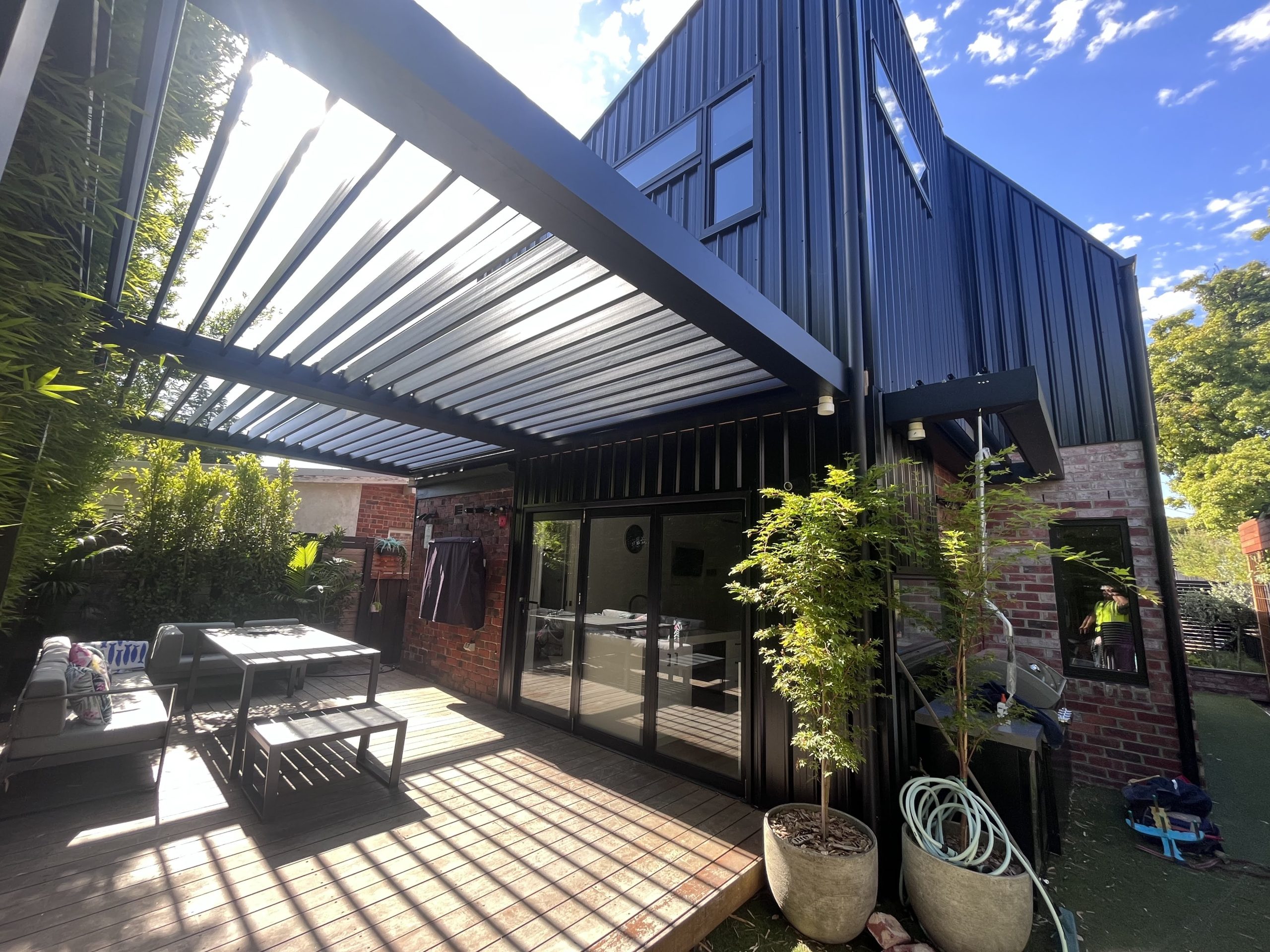
Most New Zealand homeowners know what they want: a covered outdoor space that actually works year-round. The hard part is figuring out which type of cover to choose. A louvred pergola and a retractable patio roof can look similar on the surface, but they operate differently and suit different priorities. Getting this decision right before you start means fewer surprises once the structure is in place.
This guide compares both systems side by side so you can make a confident decision based on your space, your lifestyle, and the specific conditions of your property.
Not sure which system suits your space? Request a free consultation at Louvresky and the team will walk you through the options based on your site.
What Is a Louvred Pergola?
A louvred pergola is a fixed overhead structure fitted with a series of adjustable aluminium blades. Those blades rotate on a horizontal axis, giving you direct control over how much sunlight enters, how much shade is cast, and how much airflow passes through the space. On a warm afternoon you might tilt them to filter the heat without blocking the breeze. When rain arrives, you close them fully to create a sealed, waterproof cover. Most modern louvred pergolas are motorised. You adjust the blade angle from a wall panel or remote rather than getting up to manually set each slat. This makes day-to-day use genuinely practical, which matters in Auckland where conditions can change from morning to afternoon and back again. Louvresky offers three louvre pergola series, each built to different structural specifications. Louvresky's Mana Louvre is the heavy-duty option: a premium profile with copper fixing components, rated for wind resistance up to 220km/h. It is designed for large spans, exposed sites, and coastal environments where structural rigidity is the priority. The Toa Louvre uses standard-thickness blades and composite fixing components, making it well-suited for residential and light commercial projects where performance requirements are more typical. The Te Pō series, which is the retractable option, is covered separately below. Both the Mana and Toa series are fixed structures. The blades adjust in angle but the roof itself does not move. For most NZ homeowners who want a reliable year-round outdoor room, this is exactly what the situation calls for.- Louvred pergolas have fixed-position blades that rotate to control light, shade, and ventilation.
- The Mana Series is built for large spans and high-wind environments; the Toa suits standard residential use.
- Motorised systems make daily adjustments simple without manual effort.
What Is a Retractable Patio Roof?
A retractable patio roof takes the adjustable louvre concept a step further. Rather than changing the angle of the blades, the entire roof slides open along a track system, leaving the space underneath fully open to the sky. When you want complete sun exposure or a clear view overhead on a warm evening, the blades retract and stack at one end. When conditions change, they close again to give full waterproof coverage. Louvresky's Te Pō Louvre is their fully retractable louvre roof system. It is built on a T6 aluminium frame, motorised as standard, and compatible with remote control operation and smart home integration. The system includes integrated LED lighting and a built-in drainage channel, which means it functions as a complete outdoor room solution rather than just a cover you add above an existing area. Sizing is flexible across a range of spans. The distinction between this and a standard louvred pergola is a practical one. If your priority is adaptability, being able to go from fully enclosed to completely open sky with a single button press, the retractable system offers that. If you primarily want to manage light and rain rather than fully remove the roof, a fixed louvred pergola covers that need more simply.- The Te Pō Louvre is a fully retractable system that slides open to reveal an unobstructed sky view.
- It includes integrated LED lighting, drainage, and smart home compatibility as standard features.
- It is the right choice when full sky access is a priority, not just light filtering.
How Do They Compare?
Both systems use T6 aluminium construction, both are motorised, and both provide full waterproof coverage when closed. But the way they function differs enough that choosing between them is not just a matter of preference. Blade movement. A standard louvred pergola (Mana or Toa) rotates the blades around a fixed axis. You control the angle, but the blades stay in position. The Te Pō retractable system uses a track along which the blades slide and stack, physically removing the cover from above the space entirely. Opening to the sky. The Mana and Toa series can ventilate and manage light but cannot fully open overhead. The Te Pō can. If being fully open on good days is something you want, this is the defining difference between the two product types. Weather protection. When closed, both systems are fully waterproof. Integrated drainage channels manage rainfall in both cases. Neither system is a compromise when it comes to keeping weather out. Wind resistance. The Mana Series louvred pergola is rated to 220km/h, which positions it well for exposed sites. The Te Pō retractable system has solid wind resistance, though the exact rating varies by configuration and span. For sites in known high-wind zones, the fixed Mana structure tends to be the more conservative structural choice. Smart control. Both systems support motorised operation with remote control. Smart home connectivity is available on both, with specific compatibility depending on the configuration specified. This is worth confirming during the consultation process.- Both systems are fully waterproof when closed and available with motorised smart controls.
- The key difference is blade movement: angle adjustment (Mana/Toa) versus full retraction (Te Pō).
- The Mana Series has the highest wind resistance rating at 220km/h, suited to exposed sites.
Which Is Better for Auckland's Climate?
Auckland sits in a climate zone that is genuinely demanding on outdoor structures. Summer sun is strong, particularly on north and west-facing aspects. Rain arrives unpredictably throughout the year, often without much warning. Wind is a consistent factor in many suburbs, particularly on the isthmus, the North Shore, and coastal areas to the east and west. For year-round outdoor living, both systems handle Auckland's conditions well. The choice comes down to which aspects of the climate matter most to your specific use of the space. If your priority is reliable protection, with the ability to adjust light and ventilation throughout the day, a louvred pergola handles this without complexity. You open or close the blades as conditions change. In the middle of summer, you can filter afternoon sun without shutting out the breeze. On a rainy winter afternoon, you seal it and stay dry. If you have a north-facing deck or an entertaining area where full sun access on good days is as important as rain protection on bad days, the retractable Te Pō system offers that flexibility. Coastal properties where the outdoor area is specifically oriented for views or sun exposure tend to benefit most from the fully retractable option. For high-wind environments, particularly coastal sections or elevated properties, the Mana Series louvred pergola is the more structurally conservative choice. Its 220km/h wind resistance rating means it is designed for conditions that would stress a lighter structure. Auckland Council provides guidance on outdoor structures and consent requirements, and their building consent guidance is a useful starting point for understanding what approvals may apply to your project based on site and structure type.- Both systems suit Auckland's year-round climate, including sun, rain, and wind.
- For high-wind or coastal sites, the Mana Series (rated to 220km/h) is the stronger structural choice.
- The retractable Te Pō works well for north-facing or view-oriented spaces where full sky access matters.
Key Considerations Before You Buy
Space size and required span. Each product series has structural requirements that affect how it can be configured. The total area you want to cover, the available span between supports, and how the structure connects to your home all influence which series works for your project. Freestanding versus wall-mounted. A wall-mounted structure attaches to your existing building and typically shares the drainage system. A freestanding structure requires its own post footings and independent drainage routing. Both options are available across Louvresky's range, and the choice affects installation requirements, the final appearance, and sometimes consent obligations. Building consent. Whether your project requires a building consent depends on the size of the structure, how it is installed, and your specific site. Not every pergola triggers a consent requirement, but some do. Checking with Auckland Council early in the process avoids delays later. The Louvresky team can also advise based on typical project profiles during the consultation stage. Timeline. These are custom-designed and custom-fabricated products. The process from initial consultation through to installation includes a site visit, detailed design, factory fabrication, and on-site installation. Planning ahead, particularly if you want the structure in place for summer, is worth doing. If you are still in the early stages of planning, you can browse completed Louvresky projects to get a sense of how different configurations look across a range of properties and spaces. Seeing finished installations in context often makes the decision clearer than specifications alone.- Span requirements, mounting type, and site conditions all affect which product series fits your project.
- Building consent may apply depending on structure size and installation method, so check early.
- Custom fabrication means lead times are involved; plan ahead if you have a seasonal deadline.