Louvre Roof NZ: Why Adjustable Aluminium Louvres Beat Fixed Covers for Auckland Homes
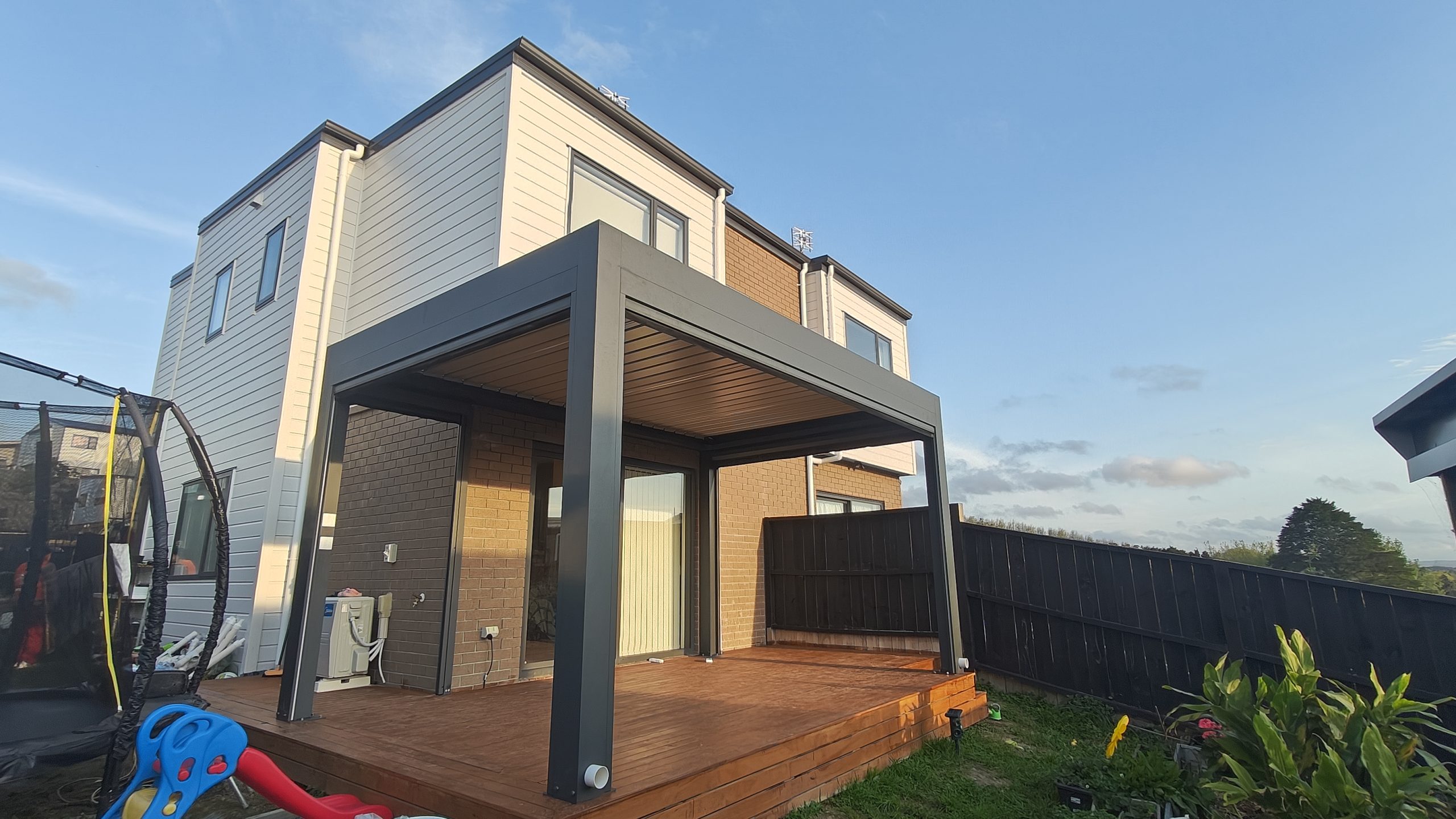
Walk into any Auckland suburb on a muggy February afternoon and you will spot them. Fixed pergola roofs that looked perfect in November and now trap heat like a glasshouse. By June the same roof is keeping the rain off, but it is also killing the winter sun that used to warm the dining table.
That is the trade-off homeowners keep running into. Fixed outdoor covers solve one problem and create another.
An adjustable aluminium louvre roof, with blades that tilt from 0 to 110 degrees, sidesteps the trade-off entirely. You get shade when it is hot, shelter when it pours, and open sky when the weather cooperates. This guide explains how a louvre roof works, why it suits Auckland’s four-seasons-in-a-day climate, and how to tell which product fits your home.
How a louvre roof works
A louvre roof is an aluminium pergola with rotating blades in place of a fixed roof panel. The blades are mounted in a frame and driven by a motor or linear actuator, which lets you change the roof’s position on demand. The frame itself can sit flat or as a gable, depending on the project.
There are three working positions.
- Fully closed. Blades sit tight against each other and act like a solid roof. Rain slides off into integrated gutter and drainage channels.
- Partial tilt. Blades angle open so breeze and filtered light come through, while overhead sun is still blocked. This is the position most owners use day to day.
- Maximum tilt. Blades rotate toward vertical, opening the gaps between them so direct sun, sky views, and full airflow come through. The blades themselves stay in place rather than retracting, so the structure remains overhead while the openings between them are at their widest.
Control is straightforward. Most systems ship with remote and wall-switch options, and smart-home integration is available for households that want voice control and scene presets.
Why louvre roofs suit Auckland’s four-seasons-in-a-day climate
Fixed roofs work in climates where the weather commits to a decision. Auckland does not. We get over 2000 hours of sunshine a year, more than 1100 mm of rain, coastal wind gusts through the Waitemata and Manukau, and summer humidity that turns a covered but un-ventilated space into a sauna. A louvre roof is designed for exactly this kind of unpredictable brief.
Summer. Angled louvres let the breeze through while blocking overhead sun. Heat does not build up underneath because the space stays ventilated. You get the shade of a covered patio without the glasshouse effect of a fixed roof.
Autumn and spring shoulder seasons. This is the sweet spot for a louvre roof. Open the blades in the morning for warmth, close them in thirty seconds when a squall rolls in off the Hauraki Gulf, and reopen once it passes. Owners who move from fixed pergolas to louvre roofs almost always mention the shoulder-season flexibility first.
Winter. Fully closed, the roof sheds rain through the integrated gutter system. You can still tilt blades partway to let low-angle winter sun warm the space, which matters more in Auckland than people realise. Winter sun sits at around 30 degrees above the horizon at midday, far below the summer position, and a tilted louvre catches it well.
Coastal wind. Aluminium construction is built to handle New Zealand’s wind zones. The Mana series, Louvresky’s heavy-duty structure built with stainless steel and brass fittings, carries an approved maximum wind rating of 220 km/h, which covers the most exposed coastal and cliff-top sites in the country. For most Auckland properties a standard residential louvre roof is more than adequate.
UV and salt spray. Powder-coat finishes are standard, and anodised options are available for properties close to the coast, where salt carried on the breeze is the real long-term threat.
Louvre roof vs the alternatives
Most homeowners arrive at a louvre roof after comparing two or three other options. Here is how they stack up.
| Cover type | Shade flexibility | Weather protection | Wind tolerance | Lifespan | Best for |
|---|---|---|---|---|---|
| Fixed pergola roof | None. Permanent shade year-round. | Yes. | High. | 20+ years (aluminium) | Single-purpose shade or shelter. |
| Shade sail | Low. Angle adjustable but not day to day. | Sun only. Not waterproof. | Must be retracted in strong wind. | 5 to 10 years. | Budget, summer-only cover. |
| Retractable awning | Medium. Extends or retracts on demand. | Sun and light rain. Retract for stormy weather. | Moderate. Retract in strong wind. | 10 to 15 years. | Flexible add-on shade for an existing patio or deck. |
| Aluminium louvre roof | High. Independent blade control, 0 to 110 degrees. | Yes. Gutters and drainage when closed. | High. Mana series rated to 220 km/h. | 20+ years. | Year-round outdoor living in variable climates. |
Read across the rows and the louvre roof is the only option that does not force a seasonal trade-off. That is why it has become the default for outdoor rooms in Auckland over the past five years.
Which Louvresky louvre roof is right for your home
Louvresky offers three louvre roof lines, each pitched at a different kind of project. Browse the full aluminium pergola range for specs and visuals, or read the short positioning guide below.
Mana. Louvresky’s flagship, a heavy-duty structure built with stainless steel and brass fittings. Built for large spans, high-wind sites, and coastal exposure, with an approved maximum wind rating of 220 km/h. Choose Mana if the project is cliff-top, beachfront, or simply larger than a standard residential patio. The stainless steel and brass fittings resist salt-air corrosion far better than standard zinc-plated alternatives, which matters on any site within a few kilometres of the coast.
Toa. Standard residential and light commercial. A stable build that suits most Auckland homes, with the full range of louvre control and finish options. Toa is the most common specification for suburban patios, attached decks, and backyard entertaining areas. For sites sheltered from coastal wind, Toa delivers the louvre-roof experience at the most accessible spec.
Te Pō. The fully retractable louvre roof system with smart control. When open-sky access matters and you want the option to remove the roof from view entirely, Te Pō is the fit. The blades retract fully rather than simply tilting, so you move from a fully covered outdoor room to an uncovered deck in seconds. More detail on the retractable patio roof page.
If you are not sure which series suits your project, the easiest path is a site visit. We can take measurements, read the wind and sun exposure of the site, and recommend the right combination.
Installation, consent, and what to expect
Timeline. Every Louvresky project runs through the same sequence. Site visit, custom quote, design confirmation, manufacture, then installation. Each stage is custom-sized to the project, so lead times vary with season and complexity. We will confirm a firm schedule at the quote stage.
Consent. Whether a louvre roof needs a building consent depends on the size of the project and the site. Some installations sit under the permitted-work threshold, others need consent, and a handful require engineering sign-off.
Warranty. Louvresky louvre roofs carry a warranty of 2 to 10 years, varying by component. Motorisation and control electronics usually sit on the shorter end, structural aluminium on the longer end.
What to look for when choosing a louvre roof supplier in NZ
Local manufacturing and a showroom you can visit. A local workshop means parts and repairs stay available years after the install, not just during the warranty period. A showroom means you can see build quality in person before committing anything. Louvresky manufactures at the Saint Johns workshop and runs a dedicated showroom where working systems are on display across the aluminium pergola range.
Verifiable wind ratings and engineered specs. Ask for the approved wind rating in writing, not a marketing claim. If a supplier cannot produce the spec, treat that as a signal. On our flagship Mana series the approved maximum is 220 km/h, which is backed by the engineering file.
Clear, itemised warranty terms. Louvre roofs have several components with different life expectancies. A warranty of 2 to 10 years varying by component is standard across the industry. If a supplier offers a single blanket figure covering every component, ask specifically which number applies to the motor, the finish, and the structure.
Consent and engineering support. If the project may cross a council threshold, the supplier should be willing to help you navigate that. Louvresky flags likely consent requirements during the initial site visit and points you to the right steps for Auckland Council. That saves weeks of back-and-forth later.
Responsive after-sales service. A louvre roof is a long-term investment. Ten years in, you will want a supplier who still answers the phone and still has spares. Ask how long the supplier has been operating in New Zealand and whether they service their own installs.
Get a louvre roof quote for your Auckland home
If you want to see a louvre roof in person, Louvresky’s Saint Johns showroom has working systems on display. You can see the blade action, the feel of the finish, and the quality of the build before you commit to anything. Otherwise book a free site visit and we will quote for your specific project.- Showroom: 177 Morrin Road, Saint Johns, Auckland
- Phone: 0800 006 888
- Quote: request a custom louvre roof quote
- Browse: the full Louvresky louvre roof range, including Mana, Toa, and Te Pō