Louvre Roof NZ: A Buyer’s Guide to Choosing the Right System
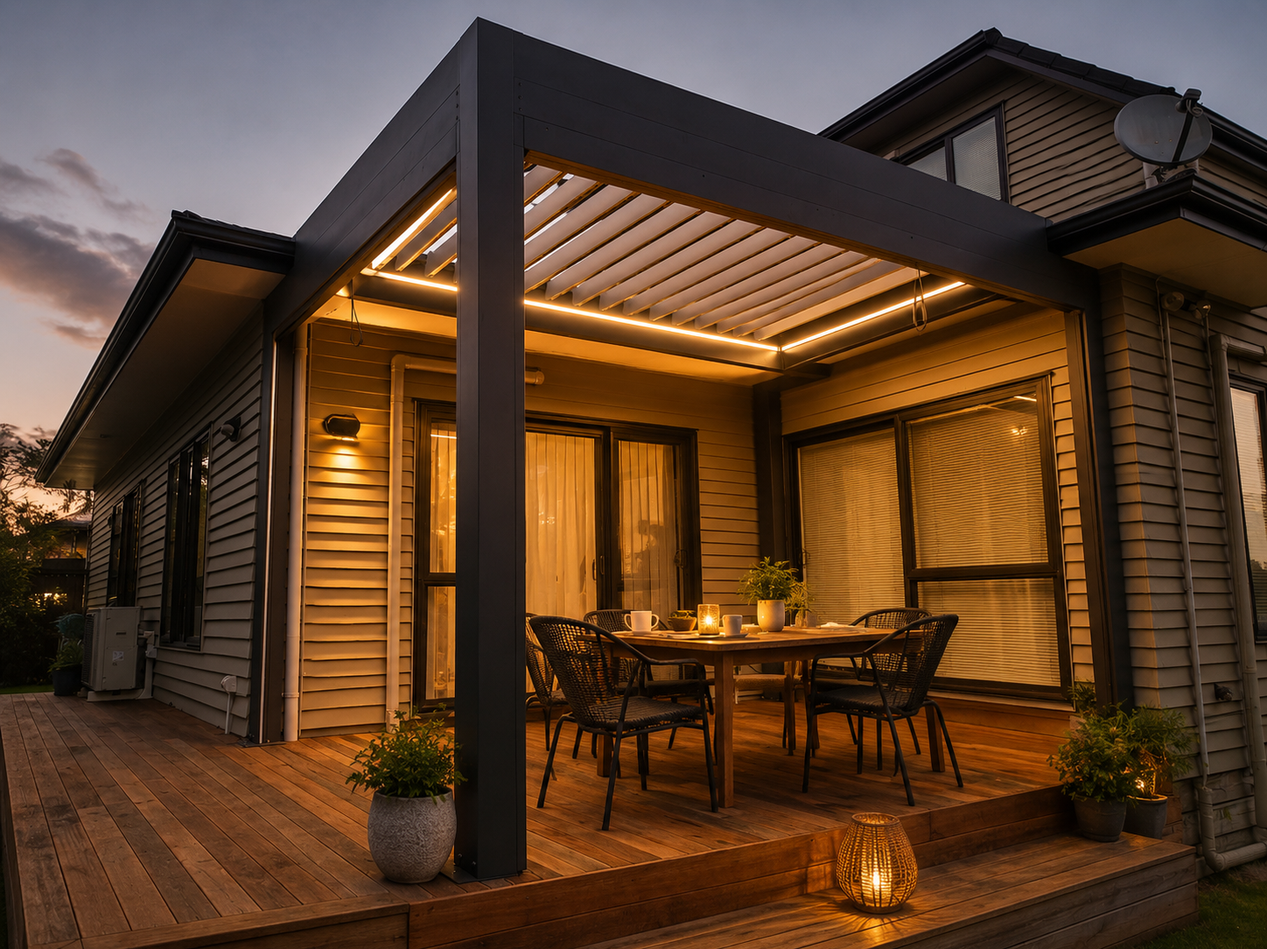
A louvre roof is one of the larger outdoor investments a New Zealand home will make, and the systems on the market vary widely in how they are built. The blades, the frame, the fittings, and the finish all separate a system that lasts from one that looks similar on day one and ages quickly. This guide is for homeowners who are comparing options and want to understand what they are actually buying before they ask for a quote.
In plain terms, a louvre roof is a set of adjustable aluminium blades you can tilt open and closed. You angle them to let in sun, shade, or airflow, then close them for shelter when the weather turns. The sections below cover how to judge build quality, how to match a system to your space, and what shapes the investment. If you would rather see the systems side by side, you can also visit the Louvresky showroom or request a quote for your space.
How to tell a quality louvre roof from a cheap one
Two louvre roofs can look almost identical in a brochure and perform very differently over a decade outdoors. These are the details worth inspecting before you commit.
- Frame and blades: look at the aluminium construction, the strength of the blades, and how the structure carries a span without flexing. A well-engineered frame holds its shape across wider openings.
- Fittings: the hardware that holds everything together is where quality is often won or lost. On premium builds, corrosion-resistant fittings make a real difference on coastal sites where salt air is constant.
- Drainage: quality systems carry water away through an integrated gutter and concealed channels when the blades are closed, rather than letting it pool or spill.
- Finish: a powder-coated or PVDF finish holds colour and stands up to NZ sun and salt spray, so the system still looks right years later.
- Customisation: a system built to your dimensions sits in the space properly, rather than forcing your area to fit a fixed off-the-shelf size.
If you can, visit a showroom and look at these details in person. The difference between tiers is much easier to see and feel than to read.
Mana, Toa, Te Pō, or Tika: which louvre roof suits your home
Louvresky offers several louvre roof systems, each built around a different priority. A short summary helps you shortlist before you talk specifics.
- Mana: a heavy-duty structure with stainless steel and brass fittings, built for large spans, high wind, and coastal sites. It carries a maximum wind rating of up to 220 km/h, which makes it the choice for exposed locations.
- Toa: a stable, well-suited build for most New Zealand homes, covering standard residential and light commercial spaces.
- Te Pō: the fully retractable louvre roof system with smart control, for homeowners who want open-sky access when the weather is fine.
- Tika: a freestanding, four-post louvre roof offered in a curated range of ready sizes, a simpler entry option for homeowners who want a quicker path and do not need the system fixed to a wall.
Mana, Toa, and Te Pō are custom-built to your space, while Tika is a ready-sized entry line, so you can choose between a fully bespoke system and a simpler ready-made one.
Operation and control options
Day to day, a louvre roof should be easy to live with, and most of that experience comes down to how you operate it.
- Control runs from manual through to remote, wall switch, app control, and smart-home integration, with each option sitting at a different cost tier.
- The blades tilt to your preferred position for sun, shade, and airflow, then close for shelter when you need it.
- Smooth, quiet movement is a good sign of a well-built system, so it is worth operating one in person before you decide.
Materials and weatherproofing for New Zealand conditions
For most buyers, the real question is whether the system will handle local weather, and New Zealand conditions ask a lot of an outdoor structure.
- Aluminium construction designed for NZ wind, with Mana rated up to 220 km/h for exposed and coastal sites.
- Stainless steel and brass fittings on Mana, which give a corrosion advantage where salt air is a factor near the coast.
- Powder-coated and PVDF finishes that resist UV fade and salt spray.
- Waterproof when closed, with the blades opening to let breeze and light through once the weather clears.
What shapes the investment
The cost of a louvre roof reflects the project rather than a fixed catalogue price. Size, the series you choose, the level of motorisation, site and access, drainage, and any accessories all move the figure. Because each system is custom-built, it is quoted on its own measurements and site.
We cover this in detail in our companion guide on how much a louvre roof costs in NZ, so this guide can stay focused on choosing the right system.
Your louvre roof buying checklist
Before you sign off on a quote, run through a short checklist:
- Is the system custom-built to your space, or forced to fit a fixed size?
- Do the fittings and finish suit your site, especially if you are near the coast?
- Which control option matches how you will actually use it?
- What does the warranty cover? Louvresky systems carry a 2 to 10 year warranty that varies by component.
- Does the supplier have a showroom you can visit and a portfolio of completed projects to look at?
Consent requirements depend on the size of the project and the site, so it is worth raising early rather than assuming one way or the other.
Frequently asked questions
What is the best louvre roof system in NZ?
There is no single best system, because the right one depends on your site. Mana suits exposed and coastal homes that need a heavy-duty structure, Toa covers most standard residential spaces, Te Pō is the choice when you want a fully retractable roof with open-sky access, and Tika is a simpler freestanding option in ready sizes.
Are louvre roofs waterproof?
A louvre roof is waterproof when the blades are closed, with an integrated gutter and concealed channels carrying water away. When the weather is fine, you open the blades to let breeze and light through.
Can a louvre roof be custom-built to my space?
Yes. Mana, Toa, and Te Pō are custom-built to your dimensions and site, so the system fits the space properly. Tika is the ready-sized entry option if you would prefer a simpler, quicker path.
See a louvre roof system in person
The clearest way to judge a louvre roof is to see one in person. Visit the Louvresky showroom to compare the systems side by side, then request a quote for your space.
- Explore the range: louvresky.co.nz/aluminium-pergola/
- Showroom: 177 Morrin Road, Saint Johns, Auckland
- Phone: 0800 006 888