Key Factors to Consider When Planning a Custom Pergola Outdoor Structure
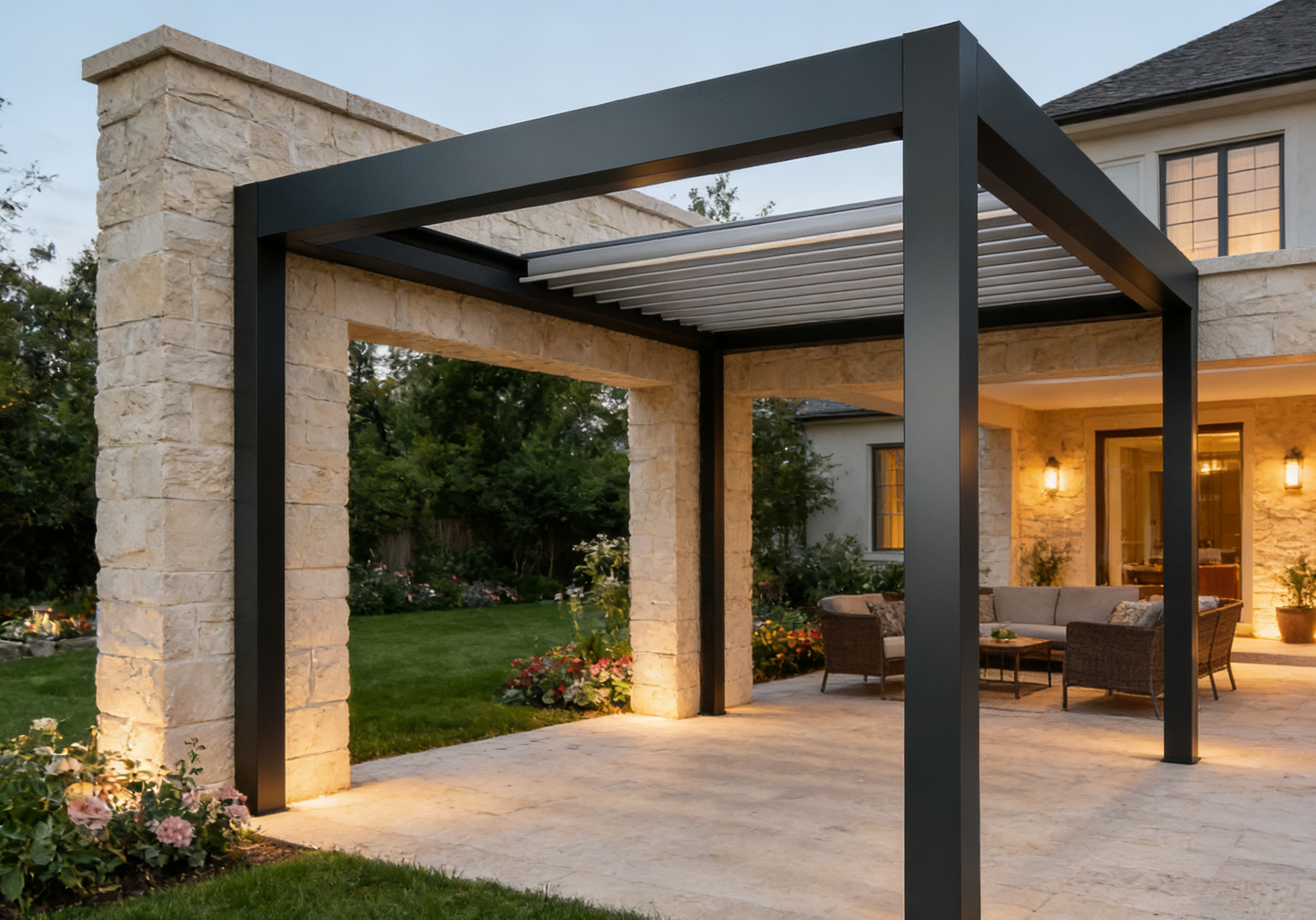
When people start planning an outdoor structure like a pergola, they often begin with the look or the size. But the comfort you feel day to day usually comes from decisions made much earlier, how the space handles wind, sun, rain, and how it fits into the way you actually live.
A truly good outdoor structure isn’t just “shade” or “cover.” It’s a space that stays usable across seasons, different weather, and different routines. That long-term usability comes from planning the site, performance, and flexibility first, then choosing the right louvre system to match.
1) Site conditions and environmental factors
Every outdoor area behaves differently. Even two homes on the same street can experience very different sun, wind, and rain patterns. Before selecting any louvre roof system, take a clear look at:
- Sun direction and heat build-up (morning vs afternoon sun, summer glare, winter warmth)
- Prevailing winds and exposure (open corners, coastal conditions, gust corridors)
- Rain patterns and drainage flow (where water tracks, splash zones, damp areas)
- Surroundings (nearby fences, neighbouring buildings, trees, privacy lines)
Planning tip: treat wind exposure as a design constraint from day one, your layout, span, fixing approach, and product selection should all respond to it.
2) Make it feel integrated with the home
An outdoor structure works best when it feels like part of the home, not a bolt-on feature. That means planning for:
- Roofline alignment and connection points
- Wall junction details and fixing strategy
- Proportions and visual balance
- Water management and drainage paths
- How the structure frames doors, windows, and views
A modern aluminium louvre pergola can look minimal and clean, but the “built-in” feel usually comes from planning the interfaces: where it meets the house, how it drains, and how it sits in the architecture.
If you want the structure to disappear into the design, choose your configuration around the building first, and treat the louvre system as the functional roof solution that supports that design.
3) Structural performance and long-term durability
Outdoor structures live in the real world, wind, UV, rain, humidity, and daily opening/closing cycles. Long-term performance depends on:
- Material stability (aluminium is popular for strength and outdoor suitability)
- Corrosion resistance, especially in coastal or high-humidity conditions
- Fixing quality and how the system holds alignment over time
Aluminium is popular for pergolas because it balances strength, stability, and suitability for outdoor use. But the fixings, joints, and connection points are just as important as the blades themselves.
Planning tip: when exposure increases, don’t only “upgrade the roof.” Make sure the fixings and structural approach are matched to the environment as well.
4) How you’ll use the space and how flexible it needs to be
A pergola only becomes “valuable” when it’s used often. That depends on whether it can adapt to:
- midday sun vs late afternoon glare
- hot still days vs breezy evenings
- light rain vs fine weather
- privacy needs vs open entertaining
This is where your roof preference becomes a clear decision:
- Adjustable louvres if your ideal experience is controlled shade + ventilation
- Retractable open-sky if you want the option to fully open the roof and switch between cover and sky
Planning tip: decide early whether your ideal experience is “controlled cover” or “cover + open-sky mode.” That single decision narrows the options quickly.
5) Which one fits you? Map your needs to the right LouvreSky system
In LouvreSky, there are three core series designed for different site conditions and roof preferences: Toa, Mana, and Te Pō, offering either fully adjustable or fully retractable louvres to help you control sunlight, shade, and airflow.
You don’t need to “pick a model” first, you just need to decide what your site demands and how you want the roof to behave. Use the prompts below to match your situation:
- If your site is relatively sheltered and you want a clean, reliable everyday pergola (strong baseline wind performance, low maintenance): Toa Louvre
- If your site is high exposure (coastal, elevated, open corners, gust corridors) or you’re planning a larger span and want a heavier-duty build: Mana Louvre
- If your priority is open-sky flexibility, being able to fully open the roof when the weather is right: Te Pō Louvre
- If you expect stronger storms or wind-driven rain and want the system positioned for the highest performance ceiling: Mana Louvre
- If you want controlled shade + ventilation as the main day-to-day experience (rather than fully retractable open-sky mode): Toa Louvre or Mana Louvre
- If you’re unsure, answer two quick questions:
-
-
Is the site high exposure or large span? Mana Louvre
-
Do you want fully open-sky mode? Te Pō Louvre
If the answer is “no” to both, Toa Louvre is typically the best starting point.
-
Once you’ve assessed exposure, span, durability needs, and roof behaviour, the system choice becomes a straightforward match rather than a guess:
- Toa Louvre fits everyday residential and light commercial use where you want clean design, durable performance, and a strong baseline for wind stability. It’s positioned with wind resistance up to 170 km/h, standard-thickness aluminium blades, and composite fixing components designed for durability and low maintenance.
- Mana Louvre suits higher exposure sites and larger spans where wind-driven conditions and harsher environments place greater demands on structure and fixings. It’s positioned with thick-profile aluminium blades, premium copper fixing elements, and wind resistance highlighted up to 220 km/h.
- Te Pō Louvre fits flexibility-first outdoor living for people who want open-sky capability. It’s positioned as a fully retractable louvre roof system with motorised operation and smart or remote integration.
At this stage, the system choice reflects the decisions you’ve already made, it doesn’t replace them.
6) Returning to what matters: a truly usable outdoor space, long term
The best outdoor structures don’t just look good on day one, they stay comfortable and practical for years. The real goal is simple:
- a space you can use across more of the year
- a structure that matches the environment, not just the aesthetic
- performance that reduces ongoing maintenance and “workarounds”
- flexibility that fits real routines, family life, entertaining, quiet evenings, and changing seasons
If you plan around site conditions first, integrate the pergola structure with the home, and match performance and flexibility to your lifestyle, choosing between Toa, Mana, and Te Pō becomes much easier, and the result is an outdoor living area you’ll actually keep using long-term.