How to Plan Drainage & Rainwater Management for an Aluminium Pergola
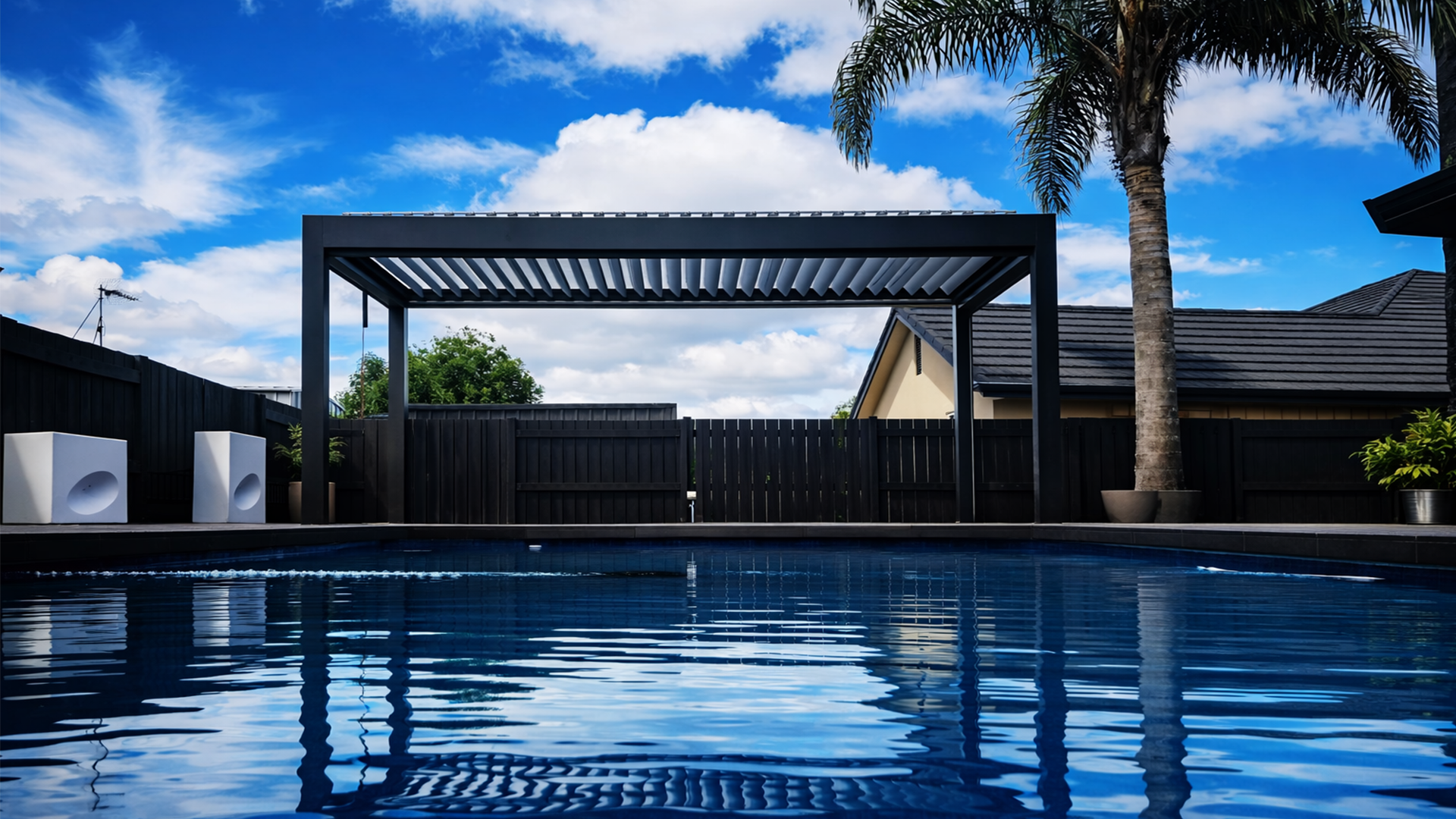
A lot of pergola outdoor spaces look perfect on day one, until the first heavy rain. Suddenly you’re dealing with puddles underfoot, water spilling where you don’t want it, damp patches near walls, or annoying drips along the edges.
The truth is: most pergola “problems” start with drainage. Rainwater management isn’t an optional extra. It’s one of the most important planning decisions for long-term comfort, safety, and durability, especially for a louvre roof aluminium pergola designed for year-round living.
The real challenges rain creates around outdoor structures
Before choosing a pergola size or style, it helps to identify where water will go in real life:
- Pooling at the base where paving meets posts or where ground levels dip
- Overflow at the edges that splashes onto outdoor furniture or tracks back to the house
- Slow drainage that leaves surfaces wet and slippery after rain
- Persistent dampness in shaded corners or near planting beds that hold moisture
These issues usually aren’t caused by “bad luck.” They’re caused by drainage not being planned early enough.
Why good drainage planning matters more than you think
A roof can look sleek and minimal, but if water isn’t controlled, the space becomes harder to use and maintain. A well-planned drainage strategy helps you:
- Protect exterior walls and door thresholds from water exposure
- Keep the floor area dry and safe to walk on
- Reduce staining and water marks on beams and finishes
- Extend the lifespan of the structure and moving parts
If your goal is a pergola you’ll actually use across seasons, drainage needs to be designed in from the start, not “fixed later.”
3 common rainwater management approaches (and when they work best)
1) Hidden drainage (integrated gutters + internal water channels)
This is the most popular approach for modern aluminium pergolas because it keeps the look clean while controlling water properly.
LouvreSky specifically highlights a Hidden Drainage System in its aluminium pergola specification list, paired with defined gutter components.
Best for:
- Clean, architectural designs
- Homes where you don’t want visible downpipes
- Areas where rain runoff must be controlled precisely
2) Ground-level water flow guidance (surface grading + run-off paths)
Sometimes the simplest win is ensuring the ground is doing its job, so rain naturally flows away instead of collecting under the pergola.
Best for:
- Open patios and decks where you can set correct fall direction
- Yards where you can add strip drains or channel drains at the perimeter
3) Downpipes + drains (high-volume, heavy-rain performance)
If your site gets strong downpours or water must be moved fast, connecting roof runoff to drainage points is often the safest approach.
Best for:
- Heavy rain zones
- Large-span pergolas
- Installations that need to connect with the home’s existing drainage system
Drainage integration: the planning details that prevent leaks and “drip zones”
Start with where water must not go
Drainage planning is as much about avoiding problems as it is about moving water.
Plan to prevent:
- Water dumping directly onto walkways or seating areas
- Water tracking back toward sliding doors or exterior wall junctions
- Overflow onto garden edges where soil splashes up and stains surfaces
Match drainage strategy to roof form
If your pergola design includes a slope, you can speed up runoff.
LouvreSky’s project examples highlight sloped roof pergola designs as being “optimised for drainage and ventilation,” which is especially useful when you want faster water shedding in wet conditions.
Use systems designed for weather-resistance (not just “shade”)
For aluminium louvre pergolas, drainage works best when the roof system, gutters, and accessories are designed as one integrated solution, not assembled as separate parts later.
LouvreSky’s aluminium pergola spec list includes:
- Hidden drainage system
- Defined gutter sizing
- IP67 motor grade (with UL & CE certification stated on-page)
- Optional accessories like rain sensors
That combination matters because water management isn’t only about where water flows, it’s also about how reliably the roof operates over time in wet weather.
Designing for rain and wind exposure
Up to this point, we’ve talked about where rainwater should go. The next step is just as practical: how much water are you asking the system to handle, and under what conditions?
Because in real weather, drainage isn’t tested by rain alone, it’s tested by volume + wind + span:
- Bigger roofs collect more water, faster
- Open or coastal sites push rain sideways, increasing “edge spill” and splashback
- Longer spans can concentrate runoff into fewer outlets, putting more demand on gutters and joints
So if your site is more exposed or your pergola is larger, the smartest approach is to treat this as a load problem: you don’t just choose a drainage method, you choose a build level that can handle the conditions consistently.
In Louvresky, there are two key series designed for different site demands: Toa and Mana.
Toa Louvre: everyday exposure, stable and low maintenance
If your pergola is for residential or light commercial use and the site is relatively sheltered, Toa Louvre is a practical fit. It’s positioned for reliable day-to-day performance with a clean finish, and its corrosion-resistant composite fixing components support low-maintenance use in wet weather.
Mana Louvre: higher exposure, larger spans, stronger weather demand
If your site is more exposed (windier, coastal, elevated) or you’re working with a larger span, Mana Louvre is built for that higher demand. It’s positioned for high-exposure applications, with premium copper fixing elements and wind resistance up to 220 km/h in extreme conditions, exactly the kind of environment where wind-driven rain and heavier runoff can stress gutters, edges, and joints.
A practical drainage planning checklist
Roof + runoff
- Where will water collect first during heavy rain?
- Which edge should water be guided toward, and why?
- Do you need a sloped configuration for faster runoff?
Structure + home connection
- Are wall junctions and thresholds protected from splash and overflow?
- Will runoff create wet zones near doors or exterior cladding?
Ground + surface
- Does your paving/decking have correct fall away from the home?
- Do you need a channel drain at the pergola perimeter?
System features
- Does your pergola system include hidden drainage and defined guttering?
- Are you adding rain sensors or smart control to reduce “caught out by weather” moments?
Final thought: drainage is what makes a pergola feel “built for real life”
A well-designed aluminium pergola isn’t just about shade, it’s about staying comfortable and usable through changing conditions. When drainage is planned properly from day one, you get a space that dries faster, stays cleaner, protects your home better, and feels reliable year after year.
LouvreSky’s approach, combining hidden drainage, weather-ready detailing, and series options for different exposure levels, fits best when pergola drainage is treated as a core part of the design, not a finishing touch.